How much should or must a patient know about their illness?
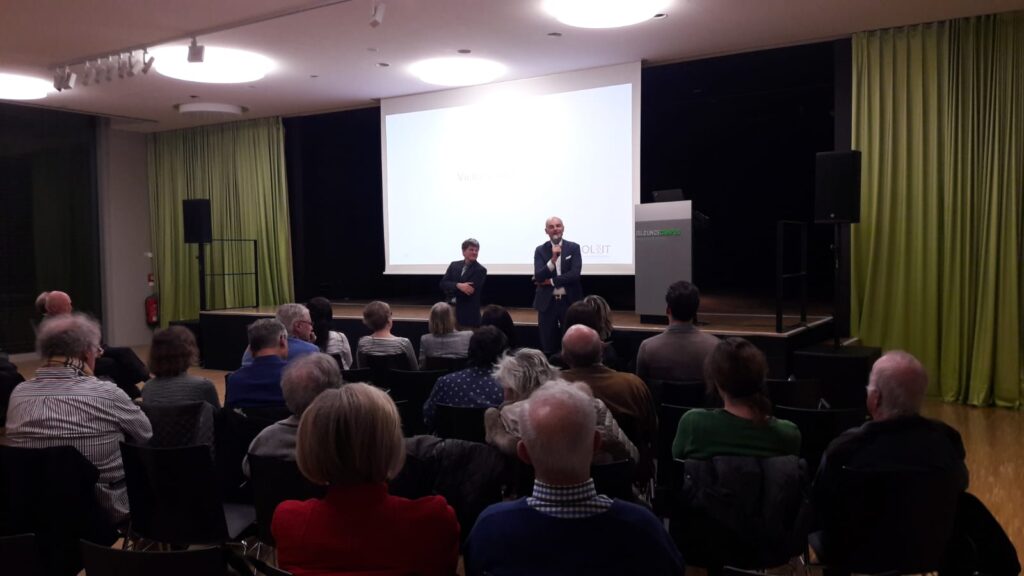
This question was at the center of the 11th Heilbronner Dialog, which was explored from a range of perspectives.
Marita Käckenmeister, founder of the Multiple Myeloma Support Group at SLK Clinic Heilbronn, opened the evening with her personal illness story. She highlighted that, especially at the time of diagnosis, not everyone has the desire to learn everything about their disease. Instead, feelings of helplessness often take over, and it is usually the relatives who initially absorb the overwhelming flow of information. When curiosity does arise later, people often turn to the internet – which, as she emphasized, can never replace a real physician.
Dr. Wiebke Braune from the Psychosocial Cancer Counseling Center pointed out that a cancer diagnosis raises even more questions. Beyond the disease itself, the entire social environment is affected. Cancer counseling centers aim to help patients navigate the wide range of services and primarily provide information on non-medical aspects.
But is having as much information as possible always a good thing?
Dr. Sylvia Bochum raised the question of whether a well-informed patient is a blessing or a burden. Current surveys show that around 87% of patients want to be fully informed about their illness. Today, patients can educate themselves through modern media – especially the internet. However, it’s important to rely on trustworthy and independent sources. Overall, increasing health literacy among patients is seen as a positive development by physicians.
How should the doctor-patient dialogue ideally look?
This was addressed by Dr. Nadine Feyen, a physician at the SLK Clinics Heilbronn. In shared decision-making, both sides should equally exchange information and perspectives to reach a joint decision on the treatment path. This kind of active involvement also strengthens the doctor-patient relationship. But how well does this theoretical model work in real practice?
The discussion following the presentations revealed that widespread implementation of patient involvement will still take time. What was not long ago absent from medical training is only now beginning to drive change.
Until then, every patient must decide for themselves how much they want or are able to know – and communicate openly with their physician about uncertainties, or even seek a second opinion. The various counseling services available can help patients navigate the information jungle.
The MOLIT Institute thanks all participants for their lively discussion and valuable conversations.